



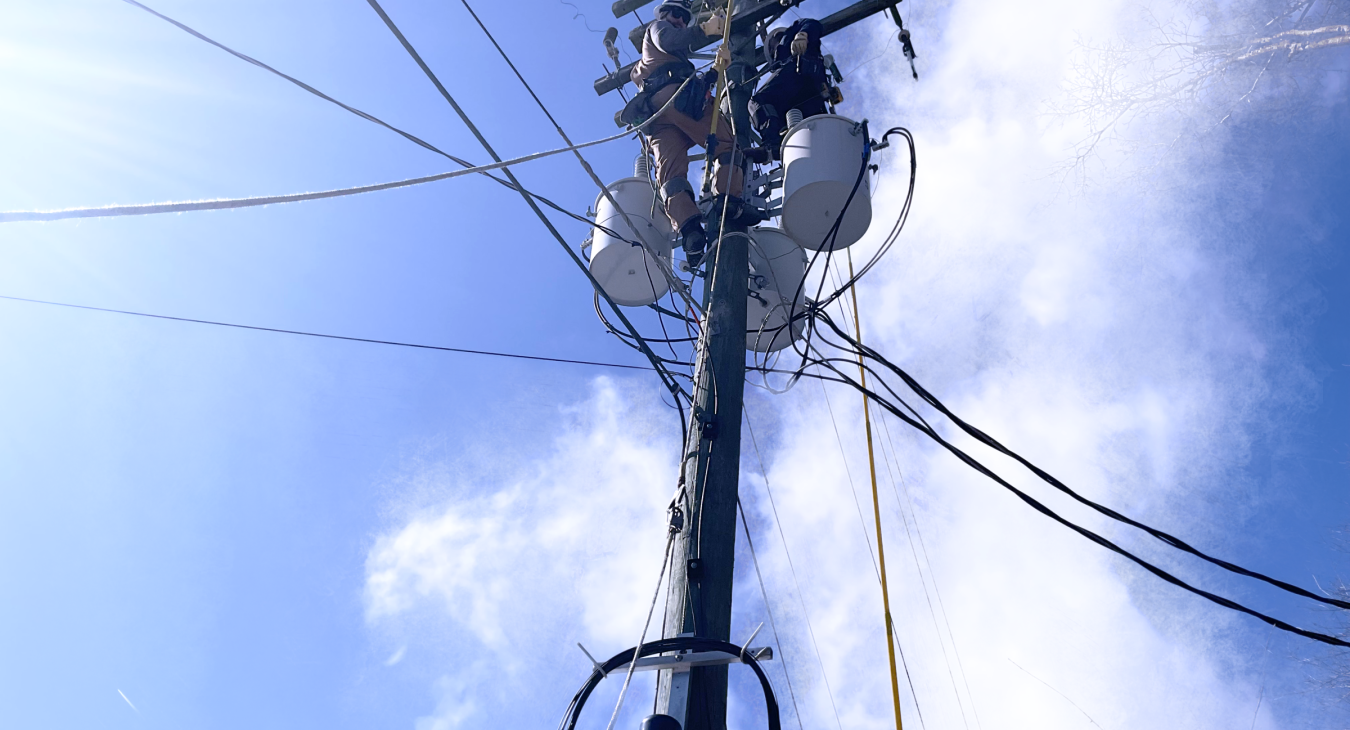
Serving Through the Storms with Lineman Jody Gilroy
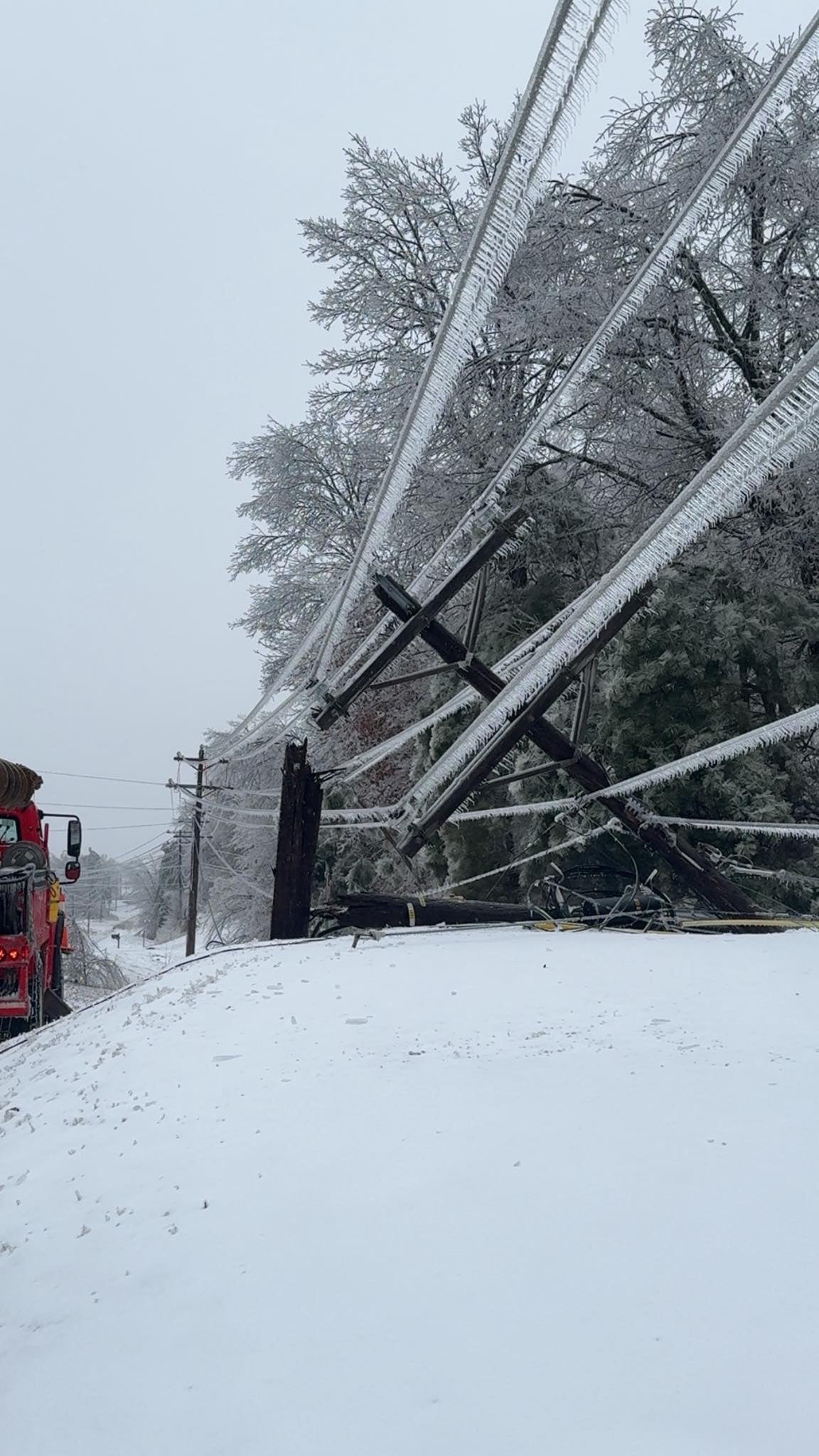
The grid shattered like the ice that covered it. In a community north of downtown Batesville, Mississippi, there wasn’t a tree, pole, anything left standing. Service lines were torn from houses. The weight of Winter Storm Fern brought everything crashing down.
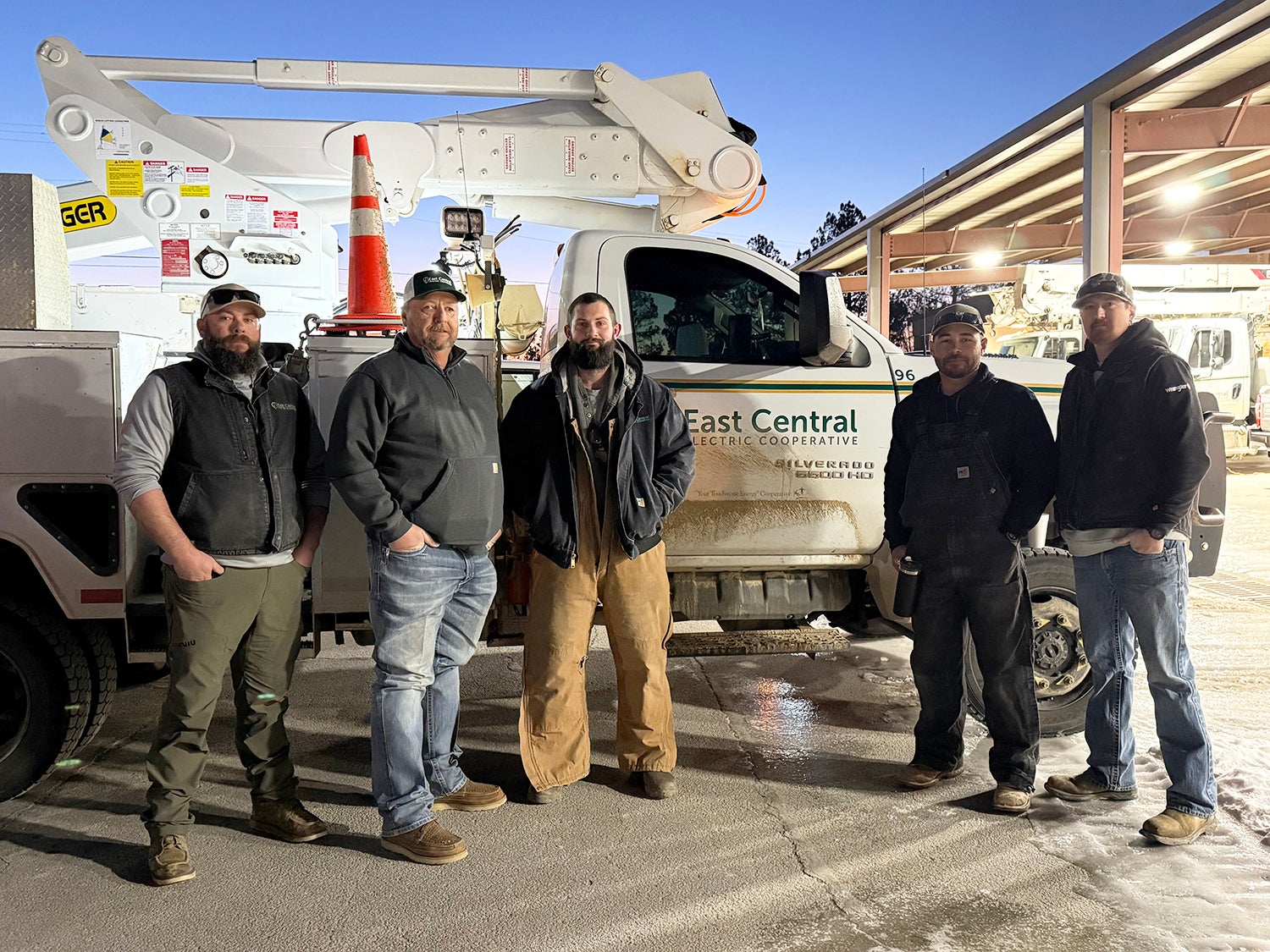
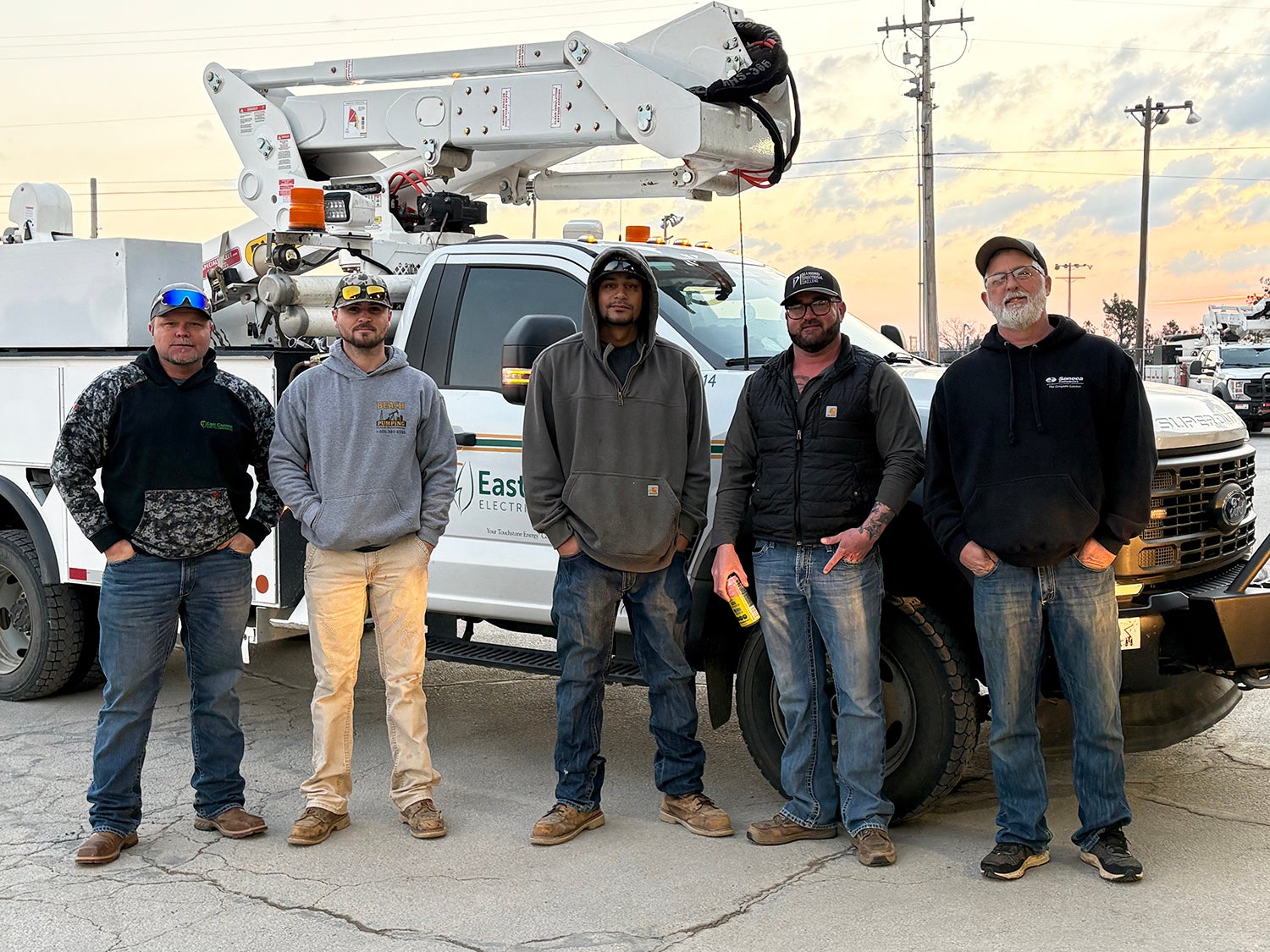
This is what East Central’s Lineman-in-Charge of Construction Jody Gilroy found when he and others traveled to provide mutual aid at Tallahatchie Valley Electric Power Association (TVEPA). The near-total loss of TVEPA’s system left 26,000 homes and businesses without power, some for almost three weeks.
“There was a lot of damage,” Jody said.
For two weeks, Jody and his crew woke before the sunrise. They gathered over breakfast, bowed their heads and said a prayer for a safe day’s work. Then by 6 a.m., they had their orders for the day, and set off to bring heat, light, and comfort back to people in need.
For Jody, this marked the start to his 29th year as a lineman for East Central Electric Cooperative.
When he was a kid, Jody performed oil field electrical work alongside his father. As a young adult, he became a journeyman electrician working at the local glass plant. When the plant shut its doors, he went back to school, finished his technical degree, and worked more as an electrician. He spent the better part of two years applying for every position that came open at East Central Electric Cooperative.
“I didn’t know nothing really about linework, but I knew electricity. That was my thing,” Jody said. “When I got on, I came up old school through some of the old linemen, and just fell in love with it. If you ever become a lineman, you just fall in love with it. It’s in your blood.”
That was 1997. The intervening years have seen industry changes, improved safety standards, and storms—a lot of storms.
The most damage he has seen was a 2001 ice storm at Kay Electric Cooperative in Blackwell, Oklahoma.
“We’d had a storm here earlier in the year, and we had lost 150 to 200 poles, and I thought, ‘boy that’s a lot.’ Then we turned around to go to Kay,” Jody said. He was on the first and third of three two-week rotations. When he arrived, the storm was still going on, and the ice was a pop can size around the wire. They spent the first day and night just clearing fallen poles off the roadway.
“You’d cut a piece of line, and you’d see a mile of poles go down,” he said. In total, Kay lost more than 6,000 poles, snapped like matchsticks.
The most widespread impact was Hurricane Katrina in 2005. On that storm, the East Central team worked pre-dawn to past-dusk, and all six men slept cramped together in a single pop-up travel trailer.
It would be natural to assume that the worst part of storm response is lack of sleep. When Jody worked the May 3 Tornadoes in 1999, they were in the field for four days straight, driving back only for poles and taking turns sleeping in the truck. On a storm in 2000, there wasn’t time to go home, so Jody slept on the concrete dock.
“Lack of sleep is just part of it,” Jody said. “You just have to enjoy the good days when you do get some sleep.”
Jody expressed pride in the crew that went with him to TVEPA.
“Everybody was in good spirits, and that makes a big difference,” he said. “We have a great group of guys outside that are willing to help do anything for anybody.”
Now that he’s a foreman, Jody said, he loves a lot of the crew as if they were his own sons.
“I started doing this work before 90% of them were born,” he joked, before switching to words of wisdom that he got from his foremen back in the day, and shares with the young guys on his crew now.
“I had an old line superintendent, John Womack, who told me, ‘You can have friends outside of here, but you can’t have friends here, because if you do, you’ll end up getting them killed.’”
“For a long time I was like, ‘yeah, whatever.’ I just didn’t understand. But he’s right. If I’m his best friend, I’m going to let him go up there without his rubber gloves on and do something that’s routine, that he’s done a million times, and he’s going to get hurt,” Jody said.
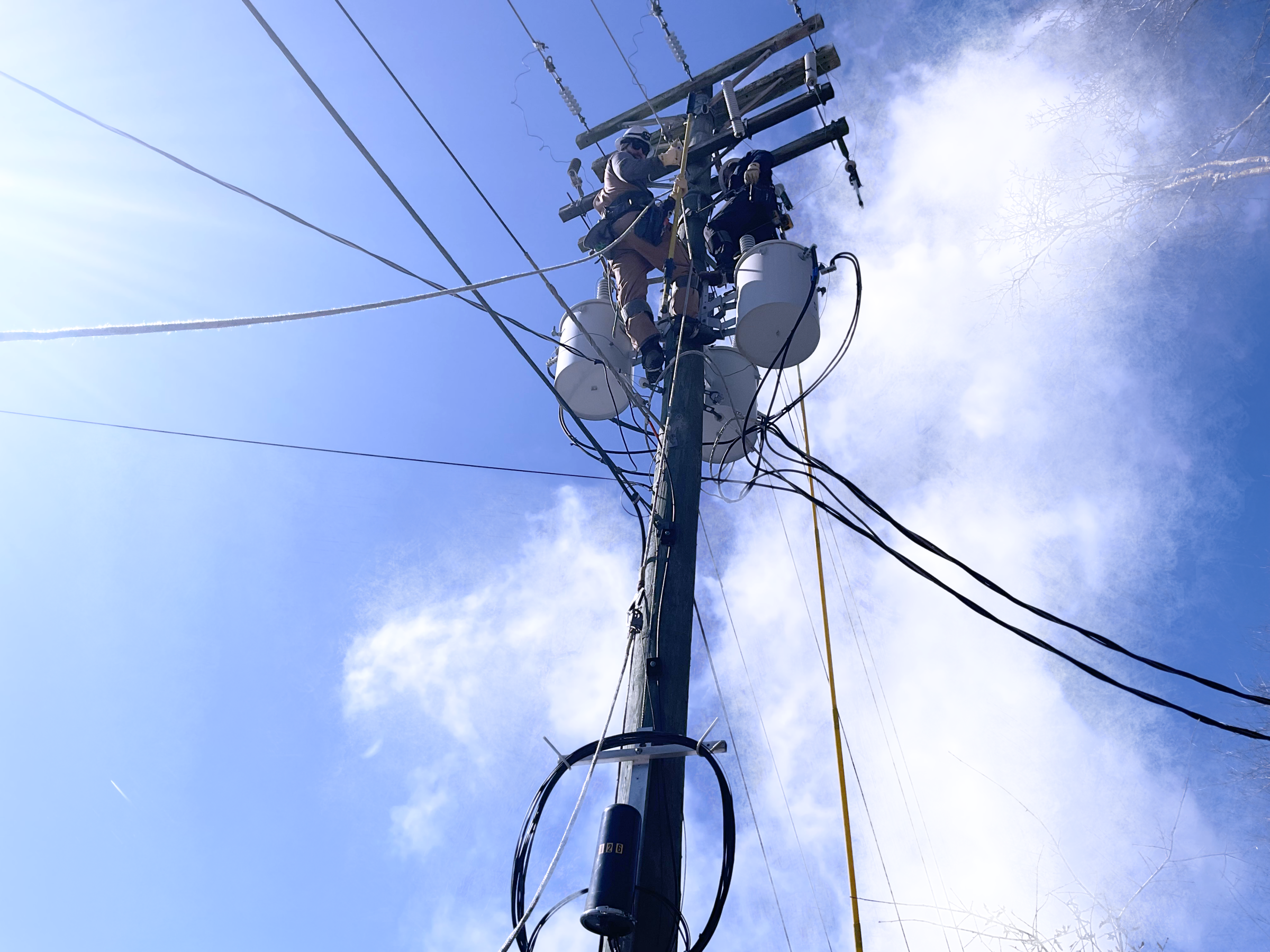
While the safety of linework has improved over the years, it is still one of the most dangerous jobs in America.
“At the end of the day our main goal, my main goal as a foreman, is that everybody goes home safely,” Jody said. “No job is more important than getting everyone home.”
The best part of a mutual aid trip, Jody said, is the people you’re getting the power back on for.
To this day, the most satisfying moment in Jody’s career was on a mutual aid trip to Malvern, Arkansas, in 2003.
“We’d been working on a piece of line all day long. There were some little girls playing on the porch, and you know, they’d wave at us,” Jody said, mentioning that the girls had been without power for days. “Well that night, we got their electric on, and we drove back by, and they waved us down. They had made cookies for us. They brought the cookies to us and they were so happy.”
“I remember that moment to this day. I mean, it’s the best feeling in the world when you get people’s lights on.”
For the last eight years, Jody has been telling the other guys, “I’m not going anymore, this is the last one.”
“But as soon as the list comes out, I sign up,” he said with a laugh.